
For decades, the Big 4 ruled the world of trust. If your finances, operations, or risk needed auditing, Deloitte, PwC, EY, or KPMG were the names to call. Their reputation was built on rigorous standards, global reach, and the ability to validate what matters most to businesses and regulators alike.
But the rise of artificial intelligence has changed the game completely — and the old audit model can’t keep up.
AI moves faster than annual review cycles. It adapts, learns, and sometimes fails in ways no spreadsheet can predict. Traditional audit frameworks were designed for static financial data, not for dynamic algorithms that evolve daily. That’s why AI assurance can’t be run like financial assurance.
At AIAuditExperts.com, we know this better than anyone — because many of our team used to be inside the Big 4 system. We helped design and deliver massive IT and digital-transformation projects across the UK, Europe, and Asia. We saw the inner workings, the partner politics, and the power of the brand. Then we saw the limitations — and decided to build something better.
This is how AI Audit Experts and the A2A (Audit-to-Action) framework were born.
Why the Big 4’s Audit Model Can’t Keep Up with AI
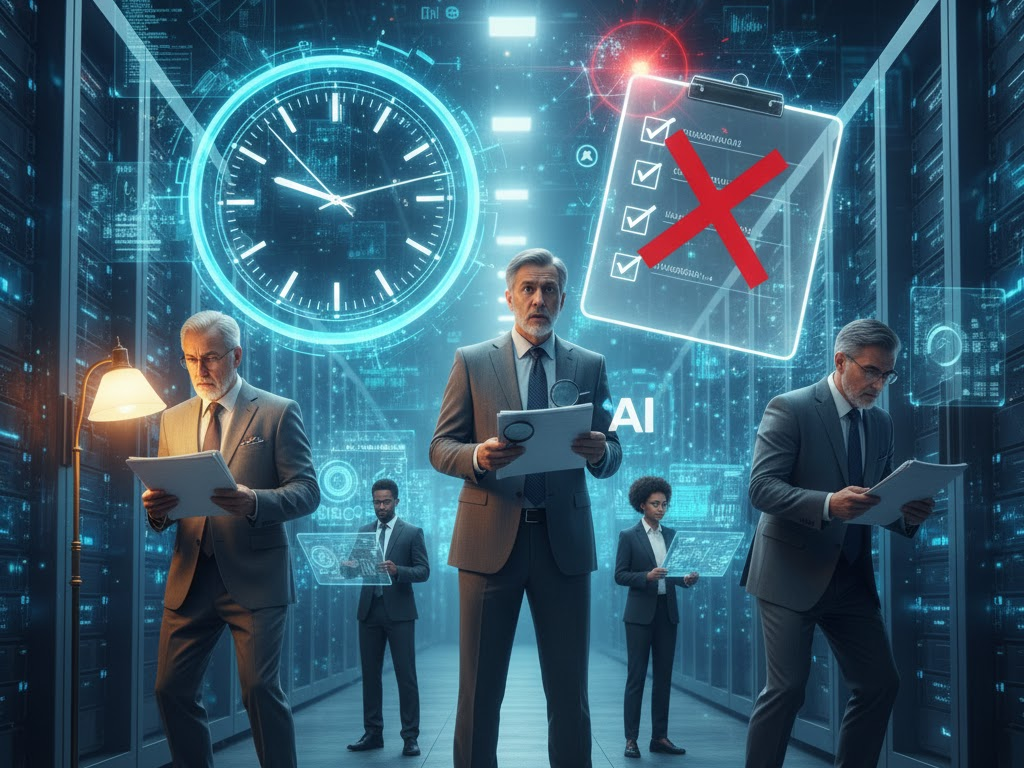
Let’s start with a simple truth: the Big 4 were built for financial data — stable, regulated, predictable. AI is none of those things. What the Big 4 Get Wrong (and What They’ll Never Admit) is that their entire framework assumes stability, not the dynamic nature of AI.
The traditional audit model excels at reviewing historical records, verifying compliance with established standards, and providing annual assurance statements. But artificial intelligence operates in a fundamentally different realm. Machine learning models don’t just process transactions; they make predictions, recommendations, and decisions that directly impact human lives.
Five Ways the Old Model Fails
Speed: AI evolves daily. Big 4 audits are annual. By the time a traditional audit cycle completes, the AI system being reviewed may have been updated dozens of times. Model drift, data changes, and algorithmic adjustments happen continuously, making point-in-time assessments virtually obsolete before the ink dries on the report.
Scope: Financial audits check compliance; AI needs behavioural validation. It’s not enough to verify that documentation exists or that privacy policies are posted. AI assurance requires testing how algorithms actually perform in real-world conditions, examining their decision patterns, and validating their fairness across diverse populations.
Talent: Their teams are full of accountants and risk managers — not machine-learning engineers. The expertise required to audit AI systems is fundamentally different from traditional audit skills. Understanding neural networks, training data, and algorithmic bias demands technical depth that most audit teams simply don’t possess.
Conflicts: They build and sell AI tools, then audit them. The Big 4 have massive technology consulting divisions that implement AI systems for clients. When those same firms are asked to audit AI deployments, the conflict of interest becomes unavoidable. Can you truly provide independent assurance on systems your own colleagues designed and sold?
Incentives: More hours equal more fees. Innovation isn’t rewarded. The traditional audit model is built on billable hours and extensive documentation. This creates perverse incentives where efficiency and innovation actually reduce revenue. Why develop faster, more effective audit methods when complexity drives profitability?
We saw it firsthand when we were inside. The Big 4 move mountains of paperwork, but when it comes to algorithmic integrity, they barely scratch the surface. AI doesn’t wait for next quarter’s review cycle — it changes overnight. That’s why traditional assurance is collapsing under its own weight.
The New Age of Assurance — From Compliance to Confidence
The world doesn’t just need auditors who understand policy; it needs auditors who understand how AI behaves. There’s a fundamental difference between checking boxes and checking algorithms. Compliance focuses on what documentation exists; confidence requires understanding what actually happens when AI systems interact with real data and real people.
At AIAuditExperts.com, we define AI assurance as continuous, evidence-based validation that your AI systems perform accurately, fairly, and safely — every day, not every year. This definition represents a complete reimagining of what audit means in the age of intelligent systems.
That means checking data integrity to ensure training datasets are clean, representative, and free from historical biases that could corrupt model outputs. It means validating algorithm performance across different demographics and use cases to confirm that AI systems deliver consistent, fair results regardless of who uses them. It means examining human-AI interaction to understand how employees and customers actually work with these tools in practice, not just in theory. And it means measuring real-world ROI to connect AI performance directly to business outcomes.
We call this the A2A Framework — AI to Action. Because an audit that doesn’t lead to action is just decoration. Traditional audits often produce impressive reports that sit on shelves, offering legal protection but little operational value. The A2A approach is fundamentally different: every finding comes with actionable recommendations, every weakness identified gets a remediation roadmap, and every audit delivers measurable improvements to AI system performance.
From the Inside Out – What We Learned from the Big 4

We don’t criticise the Big 4 as outsiders. We built careers there. We learned discipline, structure, and the value of global governance. The Big 4 taught us how to manage complex engagements, maintain rigorous standards, and deliver consistent quality across international teams. Those lessons remain invaluable.
But we also learned what slows them down. Endless partner approvals create layers of review that prioritise risk avoidance over client value. Heavy resourcing models require massive teams on every engagement, driving up costs and complexity. Rigid pricing structures make it difficult to adapt to unique client needs or innovative approaches. And perhaps most critically, fear of cannibalising their own technology divisions prevents honest conversations about AI system failures.
When AI started transforming industries, we realised the old rules no longer applied. The pace of technological change had accelerated beyond what traditional audit cycles could accommodate. The technical depth required exceeded what generalist teams could provide. And the conflicts inherent in firms that both build and audit AI systems had become impossible to ignore.
So we took the best of the Big 4 — their rigour — and ditched the rest — their bureaucracy. We left to build a firm that could move faster, think deeper, and deliver something the Big 4 couldn’t: technical truth. Not just assurance that paperwork is complete, but validation that AI systems actually work as intended.
The A2A Framework – Auditing AI Like It Actually Works

The A2A Framework represents our answer to the question: how do you audit something that learns and changes? It’s built on five core layers that work together to provide comprehensive AI assurance.
Data Integrity Assessment forms the foundation. We trace data lineage from source systems through transformation pipelines, identifying where contamination or bias might enter. We clean datasets, detect statistical anomalies, and validate that training data truly represents the populations AI systems will serve.
Model Validation examines the algorithms themselves. We cross-test accuracy across different scenarios, measure fairness using multiple statistical definitions, and monitor for drift over time. This isn’t about running the vendor’s test suite; it’s about independent validation using diverse, realistic datasets.
Operational Adoption Review bridges the gap between AI capability and human reality. We observe how employees interact with AI recommendations, measure override rates, and identify where systems fail to integrate into actual workflows. The most sophisticated algorithm is worthless if humans don’t trust or use it properly.
ROI and Risk Correlation connects AI performance to business outcomes. We quantify how model accuracy impacts revenue, calculate the cost of false positives and negatives, and measure risk exposure from algorithmic failures. This transforms AI audit from a compliance exercise into a business intelligence function.
Continuous Monitoring ensures assurance doesn’t expire the moment we deliver our report. We implement dashboards that alert you when performance drops, track bias metrics over time, and provide ongoing validation that AI systems maintain their integrity as data and conditions change.
This isn’t theory. It’s our daily process for clients across healthcare, HR, finance, and public services. We built A2A to make AI auditing faster, deeper, and measurable — not just impressive.
From Slides to Systems
The difference between traditional and A2A audits becomes clear when you examine actual engagements.
Healthcare: From Compliance to Clinical Confidence
A national hospital network asked us to review an AI diagnostic tool previously “audited” by a Big 4 firm. Their report confirmed documentation was complete and privacy compliant — but said nothing about diagnostic accuracy. The audit verified that consent forms existed, that data protection policies were posted, and that governance committees had been established. All important, but none of it addressed the critical question: does this AI actually diagnose correctly?
How AI Audit Experts Is Redefining AI Assurance, our A2A team tested the model against twenty thousand anonymised cases. We didn’t just run the vendor’s test suite; we used real patient data spanning diverse demographics, medical histories, and presentation patterns. The result revealed a nine percent bias against female patients and a five percent accuracy drop on older demographics. These weren’t hypothetical risks or theoretical concerns — they were measurable failures that would have harmed real patients.
We fixed the dataset and model pipeline, retraining the algorithm on more representative data and implementing fairness constraints. That’s real assurance. Not a compliance statement, but actual improvement in clinical outcomes.
Employee AI: Turning Ethics Into Evidence
A global HR platform had passed a “Big 4 fairness audit” that reviewed their responsible AI policies and ethical frameworks. The documentation looked excellent. The vendor’s internal testing showed acceptable fairness scores. But something felt incomplete.
We reran the model using diverse candidate simulations that reflected real-world scenarios, including career breaks, international experience, and non-traditional backgrounds. The results were striking: the system was rejecting women with career breaks forty percent more often than comparable male candidates. The bias was subtle enough to evade superficial testing but significant enough to create systemic discrimination.
We quantified the bias, retrained the algorithm, and implemented a continuous fairness dashboard that tracks discrimination metrics in real-time. That’s how AI Audit Experts turn “responsible AI” from a slogan into a system. Not through policy documents, but through evidence and action.
Continuous AI Assurance – The Future the Big 4 Missed
AI doesn’t sleep — your audit shouldn’t either. The annual audit cycle made sense when assets were static and risks were predictable. But AI systems change constantly, and risks emerge without warning. Model drift degrades accuracy over time. New data introduces unexpected biases. Edge cases that were rare become common. Waiting twelve months to discover these problems isn’t assurance; it’s negligence.
A2A provides continuous assurance, combining automation, analytics, and human expertise. It replaces the old audit cycle with ongoing validation that keeps pace with AI evolution.
Automated bias detection runs weekly, testing model outputs across protected characteristics and flagging discrimination patterns before they impact real decisions. Drift alerts monitor prediction accuracy in real-time, notifying teams immediately when performance drops below acceptable thresholds. Human auditors interpret the data, investigate anomalies, and recommend improvements based on technical analysis and business context. And clients get dashboards, not static PDFs, providing live visibility into AI system health.
That’s how modern assurance works — and it’s why global enterprises are shifting from the Big 4 to agile specialists who understand that AI audit is an ongoing process, not an annual event.
The Business Case – Why Action Beats Assurance

Executives used to pay for comfort. Now they pay for clarity. A two-hundred-page “AI governance report” looks good in the boardroom but does nothing for the bottom line. It provides legal cover and satisfies regulatory requirements, but it rarely improves actual AI performance or reduces real operational risks.
A2A audits generate tangible results: reduced risk exposure, higher compliance confidence, and measurable ROI. When AI becomes accountable, profits follow. Consider the real outcomes from recent engagements. In healthcare, we didn’t just provide a compliance statement; we improved diagnostic accuracy by eleven percent, directly impacting patient outcomes and reducing medical errors. In HR, we didn’t deliver an ethical framework slide deck; we reduced bias scores by forty-two percent, protecting the client from discrimination lawsuits while improving hiring quality. In finance, we didn’t conduct a policy review; we saved six hundred thousand pounds in model-error costs by identifying and fixing algorithmic failures before they compounded.
These aren’t marketing claims. They’re documented results from audits that prioritised action over assurance, evidence over documentation, and technical truth over comfortable fictions.
The Future of AI Auditing – Specialist Over Scale
The next decade will belong to specialists, not generalists. AI auditing will move away from Big 4 giants toward smaller, technically skilled teams that live inside the technology. The complexity and pace of AI development make it impossible for generalist audit firms to maintain the necessary expertise across all domains. The future belongs to teams that understand machine learning at a fundamental level, not firms that can mobilise hundreds of auditors armed with checklists.
Regulators are catching up too. Governments are starting to demand independent, evidence-based AI audits — not internal sign-offs. The European Union’s AI Act, regulations emerging across Asia-Pacific, and growing US scrutiny all point toward mandatory third-party validation of high-risk AI systems. These regulations increasingly specify technical requirements that go far beyond traditional audit capabilities.
That means the market is wide open for firms that can prove how AI works, not just that it exists. Organizations need auditors who can examine training data, validate algorithmic fairness, measure real-world performance, and provide continuous oversight. That’s exactly where AI Audit Experts sits.
We’re not the biggest. We’re just the ones that actually open the black box, revealing what’s inside and ensuring it works as intended.
From Big 4 to A2A – A Movement, Not Just a Method

The shift we’re leading isn’t just about process — it’s about philosophy. The Big 4’s AI Audits-Brilliant Branding or Hollow Buzz built systems of control designed to minimise risk and protect stakeholders through governance and documentation. Those systems served their purpose well in a slower, more predictable business environment.
We’re building systems of understanding. Our goal isn’t to replace the Big 4; it’s to modernise what “audit” means in the age of intelligent machines. We believe every AI system should be explainable, accountable, and continuously improved. That’s not a pitch — it’s a principle that guides every engagement we undertake.
The A2A movement recognises that AI assurance requires technical depth, operational context, and continuous validation. It demands auditors who can read code, understand statistics, and translate technical findings into business implications. And it requires independence from the conflicts that compromise objectivity when firms audit their own AI implementations..
Experience the A2A Difference
If you’re relying on a Big 4 AI audit to keep you safe, you’re probably covered legally — but not technically. Your documentation may be pristine, your policies comprehensive, and your governance committees properly constituted. But do you actually know how your AI systems perform? Can you prove they’re fair? Do you understand where they fail and why?
Book a free discovery audit to see what’s actually happening inside your AI systems. We’ll examine real model outputs, test algorithmic fairness, and provide an honest assessment of where your assurance gaps exist. Explore our A2A Framework and discover the next generation of AI assurance built for continuous validation rather than annual compliance.
We built the methodology the Big 4 wish they had — and the market’s catching up fast. The future of AI audit isn’t about scale or brand recognition. It’s about technical truth, continuous validation, and auditors who actually understand the technology they’re assessing. That future is here, and it’s called A2A.