


From Insight to Impact Across the Club
Transformation within a football club extends far beyond technology, analytics, or software implementation. It fundamentally involves building a smarter, more interconnected organisation that operates seamlessly both on and off the pitch. The modern football landscape demands intelligent evolution across every touchpoint—from scouting operations and ticketing systems to fan engagement strategies and sponsorship activation programs.
The A2A™ (Audit to Action) methodology provides football clubs with a proven, structured roadmap designed to modernise operations, adopt artificial intelligence strategically, and deliver measurable return on investment that resonates with stakeholders across the board—owners seeking profitability, fans demanding better experiences, and commercial partners requiring demonstrable value.
Why a Logical Flow Matters in Football Transformation
Football clubs represent unique organisational ecosystems that differ fundamentally from traditional businesses. They operate as emotional entities where passion, heritage, and performance intersect with commercial realities and operational demands. This distinctive nature necessitates transformation approaches that maintain clarity and credibility whilst connecting data capabilities, human resources, and organisational purpose.
For club executives, a structured transformation flow translates strategic vision into actionable initiatives. It provides a comprehensive roadmap that protects budgets from wasteful spending, ensures departmental alignment across traditionally siloed functions, and delivers visible results that justify investment decisions to boards and ownership groups.
For coaches, analysts, and operational staff, a clear methodology removes the confusion and resistance that typically accompanies technological change. It demonstrates tangibly how AI-driven workflow improvements and process optimisation actually enhance their capabilities rather than threatening their roles. This transparency builds essential buy-in from the people who ultimately determine implementation success.
For fans and commercial partners, a structured approach ensures the club evolves responsibly—preserving its identity, culture, and heritage whilst simultaneously becoming more efficient, contemporary, and profitable. The A2A™ framework enables clubs to transition from reactive firefighting mode into proactive progress engineering.
The A2A™ Methodology: A Phase-by-Phase Breakdown
Phase 0: The Kick-Off Workshop — “Understanding the Club DNA”
Every successful football transformation begins before any process mapping or system evaluation occurs. The Kick-Off Workshop represents a one-day strategic discovery sprint that convenes key voices from across the entire club structure. This isn’t a passive presentation exercise; it’s an intensive collaborative session designed to align leadership perspectives, define transformation priorities, and surface both opportunities and operational frustrations.
The workshop establishes shared understanding regarding the club’s current operational state, persistent challenges, and future ambitions. Critically, it bridges the often-significant gap between football operations and business operations—two domains that frequently operate in parallel rather than partnership.
Typical attendees include the CEO, club chairman, directors, head of football operations, coaching staff, analysts, performance specialists, commercial teams, marketing and fan engagement leads, finance and operations personnel, and optionally, key partners or sponsors. This cross-functional representation ensures comprehensive perspective.
The agenda addresses fundamental questions: What does success mean beyond match results? Where are resources—time, data, or money—being wasted? How digitally and data-mature is the organisation currently? What quick wins could generate early momentum? The session concludes with deliverables including a kick-off summary deck, stakeholder map, transformation readiness score, and approval to proceed into formal assessment phases.
Phase 1: As-Is Assessment — “Where Are We Now?”

This foundational phase involves comprehensive, detailed mapping of the club’s current operational state across all major domains: football operations, commercial activities, and administrative departments. The objective is understanding precisely and objectively how information, people, and financial resources flow through daily operations without the filters of assumption or optimistic perception.
Teams systematically identify inefficiencies that drain productivity, capability gaps that limit performance, and redundancies that waste resources without adding proportional value. The output—a thorough club-wide baseline report—functions effectively as an organisational X-ray, revealing the true operational anatomy including both healthy systems and areas requiring immediate attention. This assessment establishes the factual foundation upon which all subsequent transformation decisions will be based.
Phase 2: Current Process Definition — “How Do Things Really Work?”

Moving deliberately from perception to precision, this phase maps end-to-end workflows across critical functions including ticketing systems and fan data capture, recruitment processes and contract management, scouting operations and player evaluation, fan data management and CRM systems, media handling and content distribution, and matchday operations from arrival to departure.
The fundamental focus involves capturing how activities and processes actually occur in daily practice versus how stakeholders believe, assume, or hope they occur—a distinction that frequently reveals significant and sometimes surprising discrepancies. Visual process maps and detailed data flow diagrams document current-state reality comprehensively, creating shared understanding and revealing bottlenecks, handoff failures, and data silos that impede efficiency. This documentation becomes invaluable for AI workflow football club optimization and identifying where artificial intelligence in football operations can generate the greatest impact.
Phase 3: Gap Assessment — “What’s Missing Between Today and Tomorrow?”

This analytical phase systematically compares the club’s current performance levels, operational processes, and technological tools against best-in-class standards within modern football operations, both domestically and internationally. The assessment highlights critical disconnects between current and optimal state, identifies missed efficiency opportunities where existing resources could be better leveraged, and reveals underutilised data assets that could inform better decision-making.
The gap report and priority action matrix provide clear, prioritised direction for transformation focus areas, ensuring resources are allocated to initiatives generating maximum impact rather than being spread thinly across numerous low-value activities. This phase explicitly answers what needs to change and why those changes matter to organisational performance.
Phase 4: To-Be Process Design — “What Should the Future Look Like?”

This creative and strategic phase involves reimagining workflows with AI-driven automation capabilities, intelligent data analysis, and streamlined decision-making whilst remaining firmly rooted in the club’s unique DNA, culture, and values. The design work focuses on processes that simultaneously improve operational performance, strengthen organisational culture and collaboration, and simplify decision-making for time-pressed staff.
The future-state blueprint—essentially the club’s comprehensive digital playbook—provides detailed specifications for transformed operations across departments. This includes how AI football data management will flow, how AI-driven stadium operations will function on matchday, and how artificial intelligence in football will enhance rather than replace human expertise and judgment.
Phase 5: Change Readiness & Risk Assessment — “Are We Ready?”
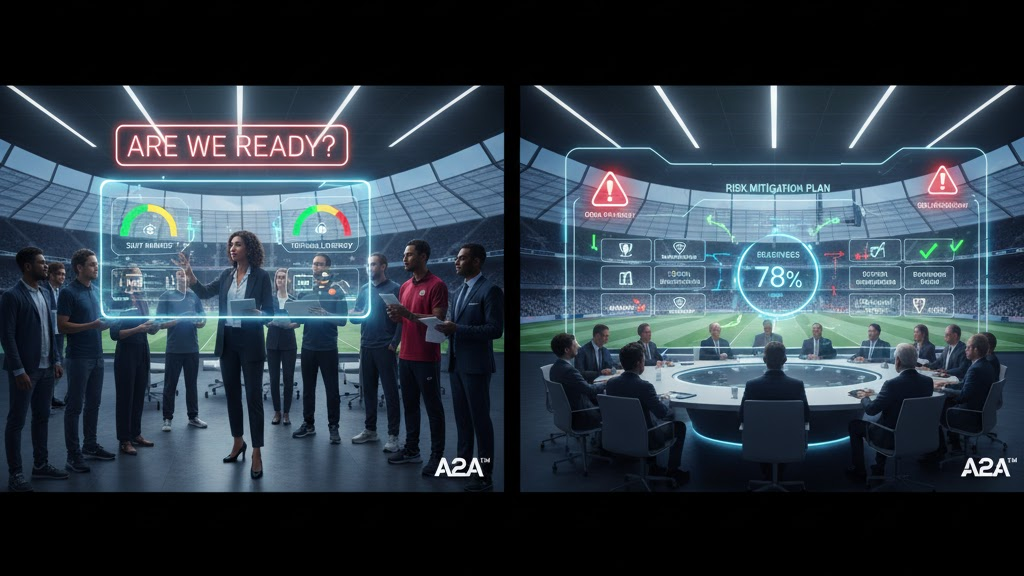
This critical diagnostic phase gauges genuine organisational readiness across three essential dimensions: leadership buy-in and sustained commitment, staff mindset and capability to adopt new approaches, and system maturity to support intended changes. Identifying and systematically addressing potential blockers before implementation prevents costly delays, budget overruns, and staff resistance that derail transformation initiatives.
The readiness scorecard and risk mitigation plan ensure proactive rather than reactive change management, anticipating challenges before they materialise and preparing contingency responses. This phase acknowledges that technical readiness alone is insufficient—cultural and human readiness are equally critical to success.
Phase 6: Stakeholder & Participation Plan — “Who Needs to Be Involved?”
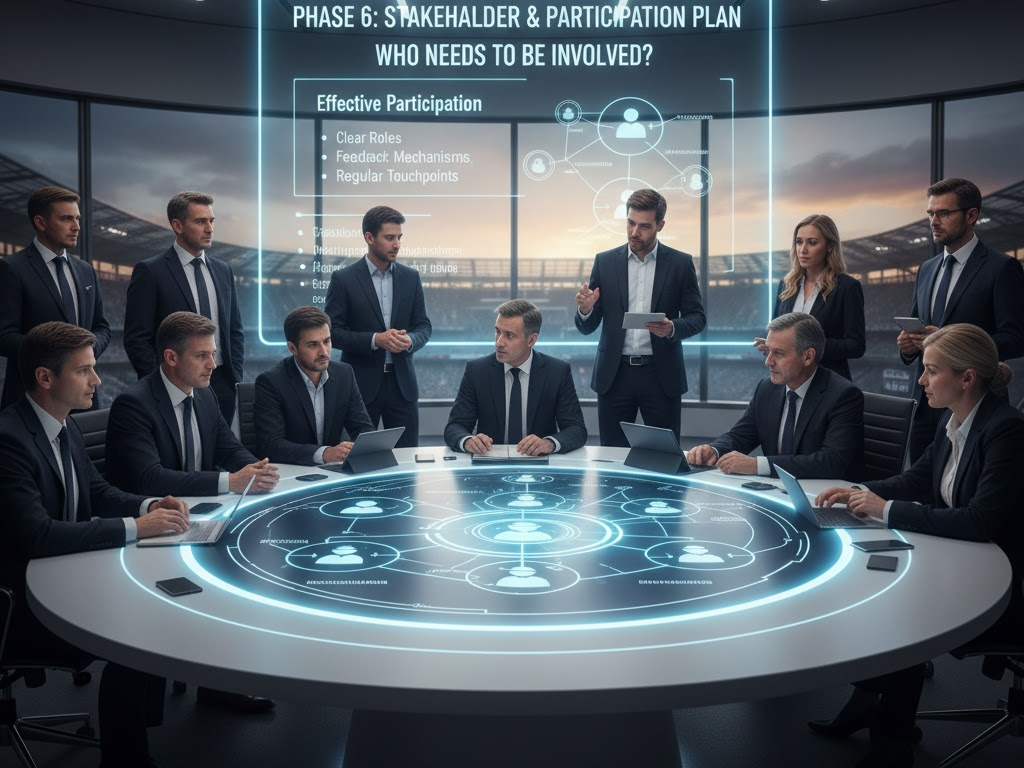
Successful transformation requires crystal-clear identification of who drives specific initiatives, who provides essential support functions, and who communicates changes effectively across the organisation at each stage. From boardroom executives making resource allocation decisions to boot room coaching staff implementing new performance analysis tools, every organisational level plays defined roles with clear responsibilities.
The stakeholder engagement and communication strategy ensures coordinated action, prevents duplicate efforts, and clarifies accountability. This plan identifies champions within departments who will advocate for changes, identifies skeptics whose concerns must be addressed, and ensures no stakeholder group is overlooked or surprised by transformation activities.
Phase 7: Communication Plan — “How Do We Tell the Story?”
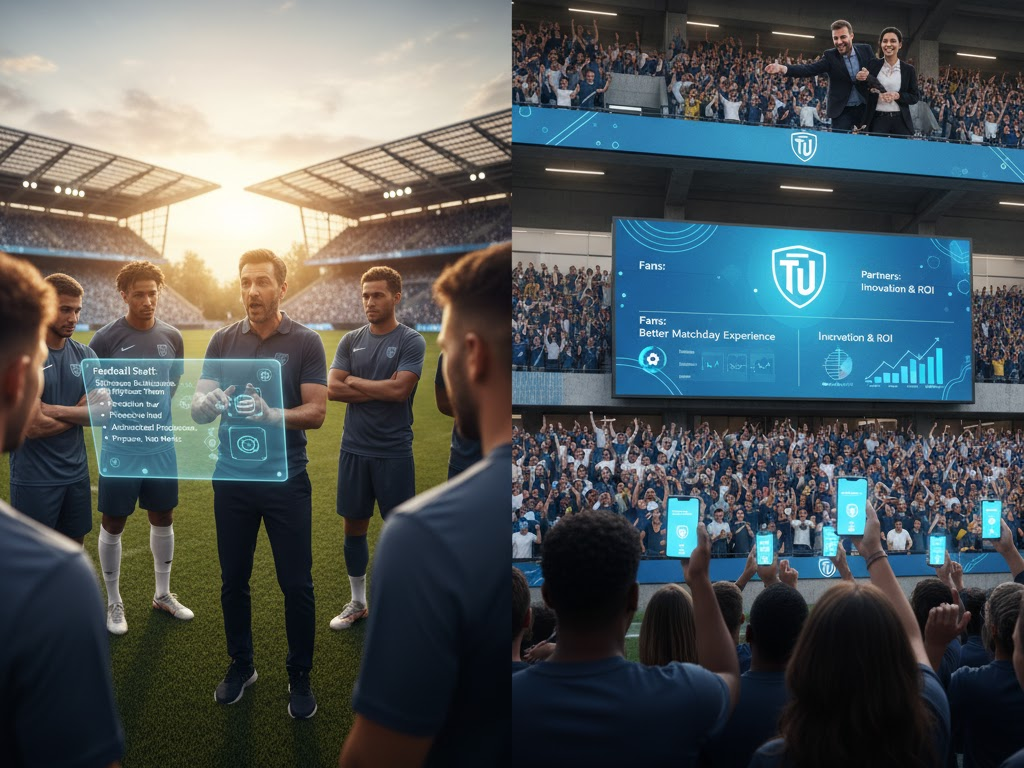
Crafting compelling, authentic narratives for internal teams, supporters, and sponsors demonstrates clearly how transformation protects the club’s heritage and identity whilst simultaneously improving operational experiences and creating new opportunities for engagement and revenue. The club-wide communications framework includes sample content for staff updates, fan communications through various channels, and partner briefings, ensuring consistent, accurate messaging that builds rather than erodes confidence.
This phase recognises that transformation is as much about perception and narrative as it is about technical implementation. How changes are communicated often determines whether they are embraced or resisted.
Phase 8: Organisation Transition Plan — “How Do We Move Smoothly?”
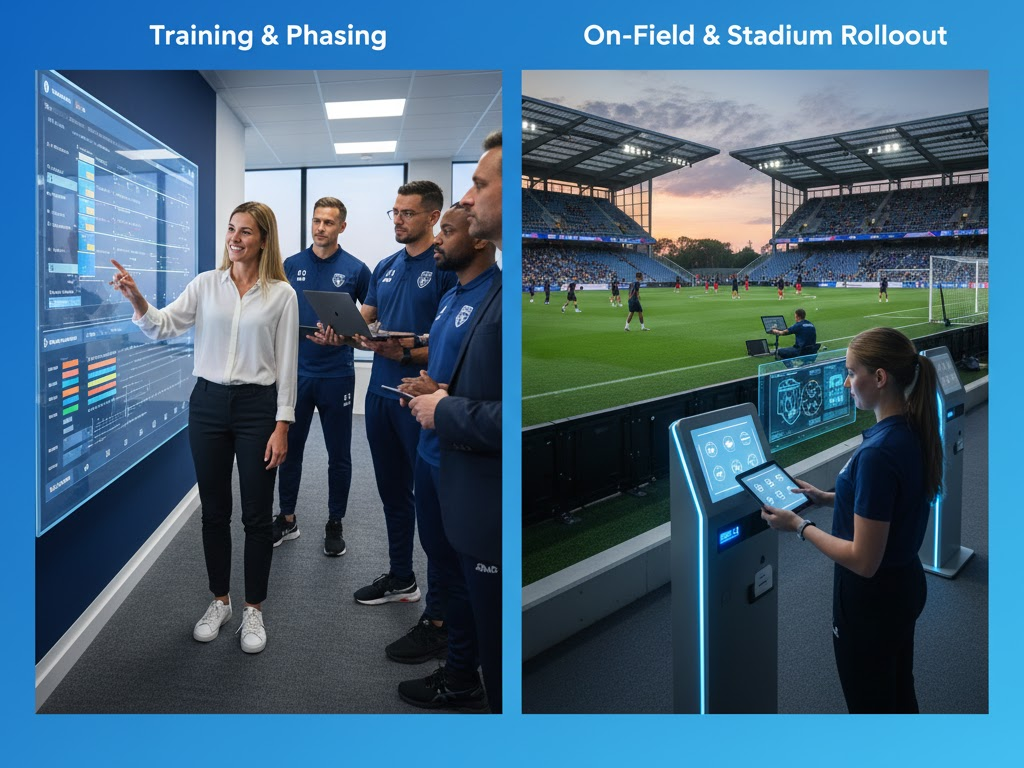
This operational phase details precisely how the club will phase in new systems, deliver comprehensive training programs, and introduce automation capabilities whilst strategically minimising disruption during critical periods like competitive fixtures, transfer windows, or major commercial campaigns. The transition timeline and training schedule provide operational clarity, ensuring staff feel supported rather than overwhelmed during implementation.
Phase 9: Implementation Roadmap — “How Do We Execute and Measure?”
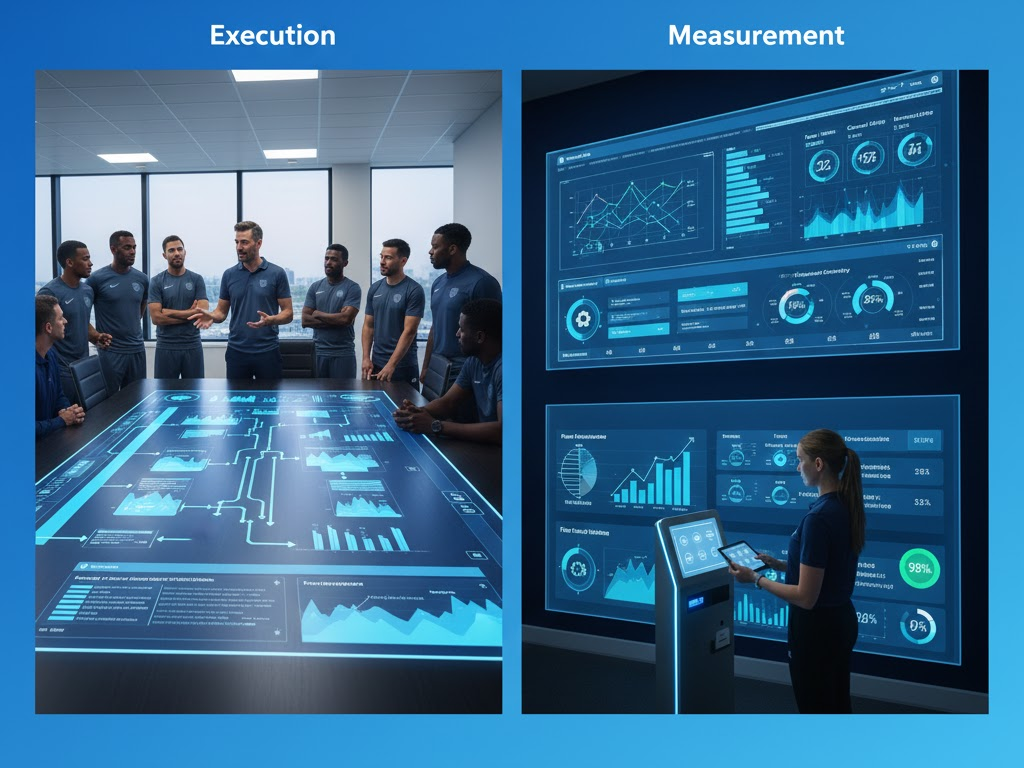
Integrating strategy, technology, people, and processes into a cohesive, sequenced execution plan, this phase transforms conceptual blueprints into actionable initiatives that deliver tangible return on investment and measurable impact across defined metrics. The master roadmap and KPI dashboard enable continuous progress tracking, accountability for deliverables, and course correction when necessary.
Phase 10: Benefits Realisation — “Did It Work?”
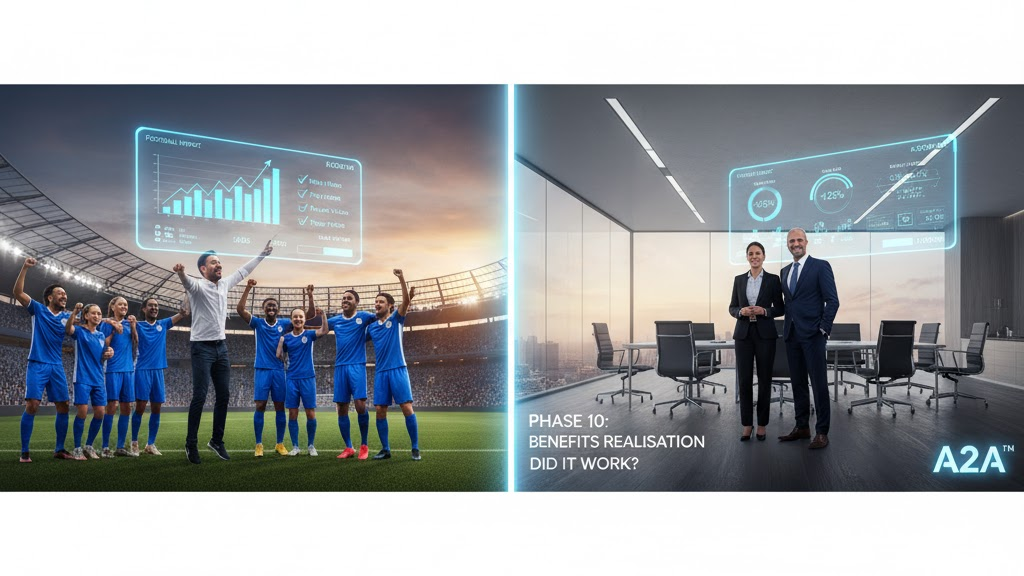
The culminating phase proves transformation impact through metrics spanning financial ROI, fan base growth and engagement depth, operational efficiency gains, and enhanced performance analytics capabilities. Results feed systematically into continuous improvement cycles, ensuring transformation delivers sustained, compounding value rather than one-time gains that deteriorate over time.
Conclusion
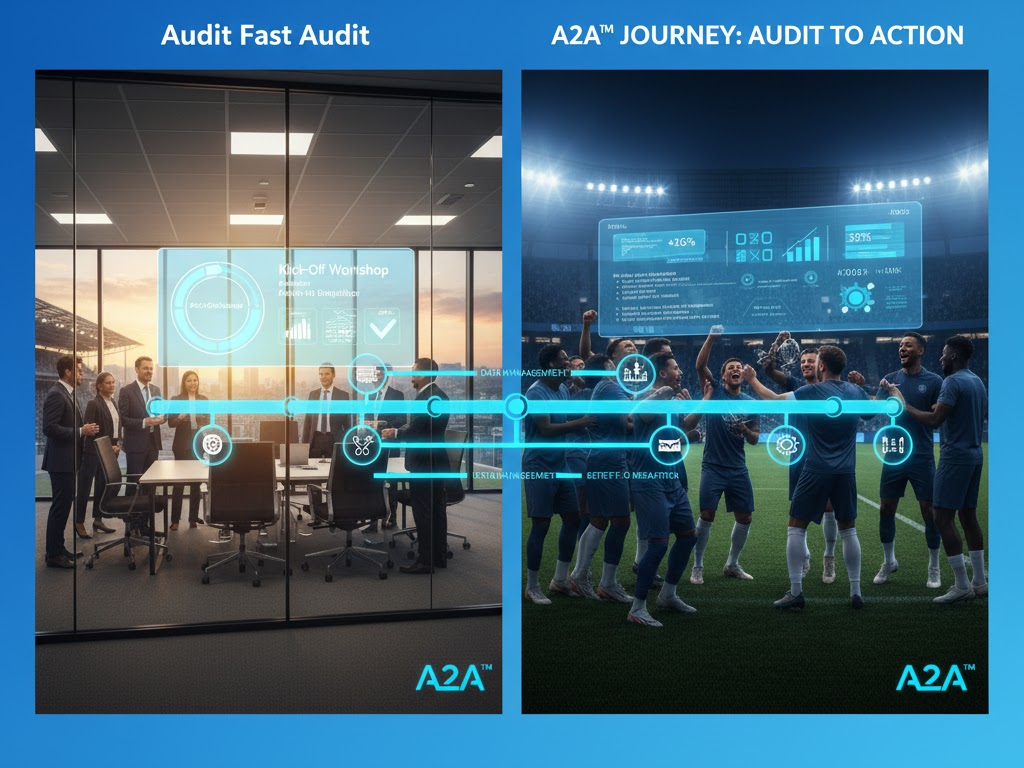
The A2A™ Methodology for Football Clubs represents a comprehensive, battle-tested transformation system built around one foundational principle: moving systematically and strategically from audit to action. Beginning with a collaborative one-day Kick-Off Workshop that aligns leadership perspectives and surfaces operational realities, the methodology progresses deliberately through discovery, design, readiness assessment, and delivery phases. This structured approach ensures every transformation initiative maintains clear ownership, generates measurable return on investment, and critically minimises disruption to football performance—the ultimate priority for any club navigating the complex intersection of sport, business, and technology in the modern game.
Want to learn what AI audits look like when they’re built for impact, not invoices?
We’re pulling back the curtain on how the Big 4 package their AI assessments versus what actually drives results on the ground. From football clubs implementing structured AI methodologies to healthcare and HR departments navigating real compliance challenges, we’re exploring the gap between consulting branding and practical implementation. If you’re curious about what these audits get right, what they conveniently overlook, and how organizations can move from assessment to actual action, this is your deep dive into the reality behind the hype.