
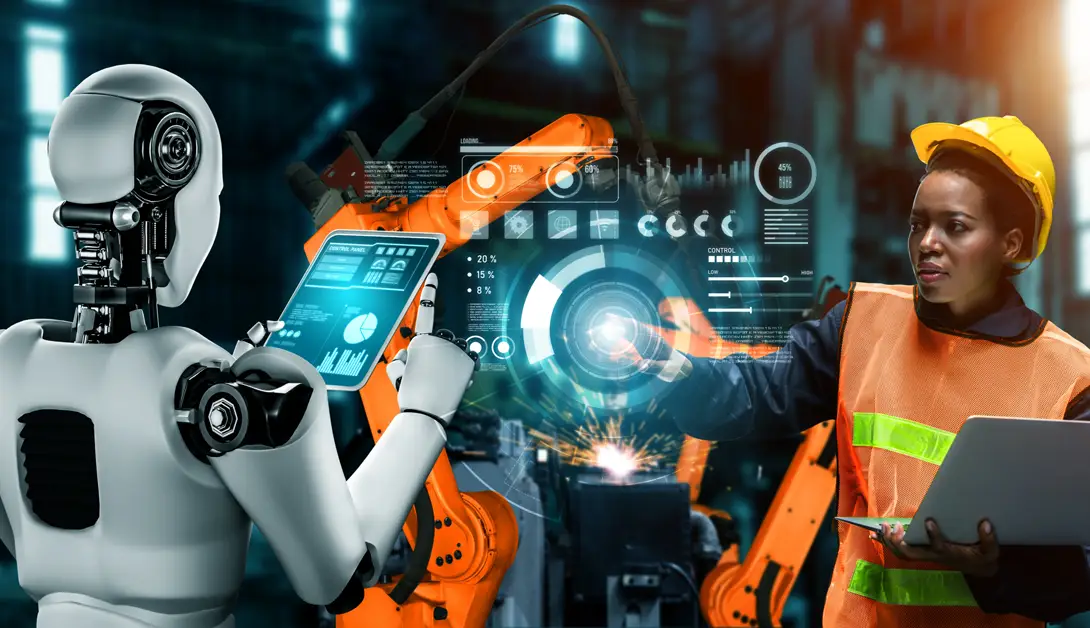
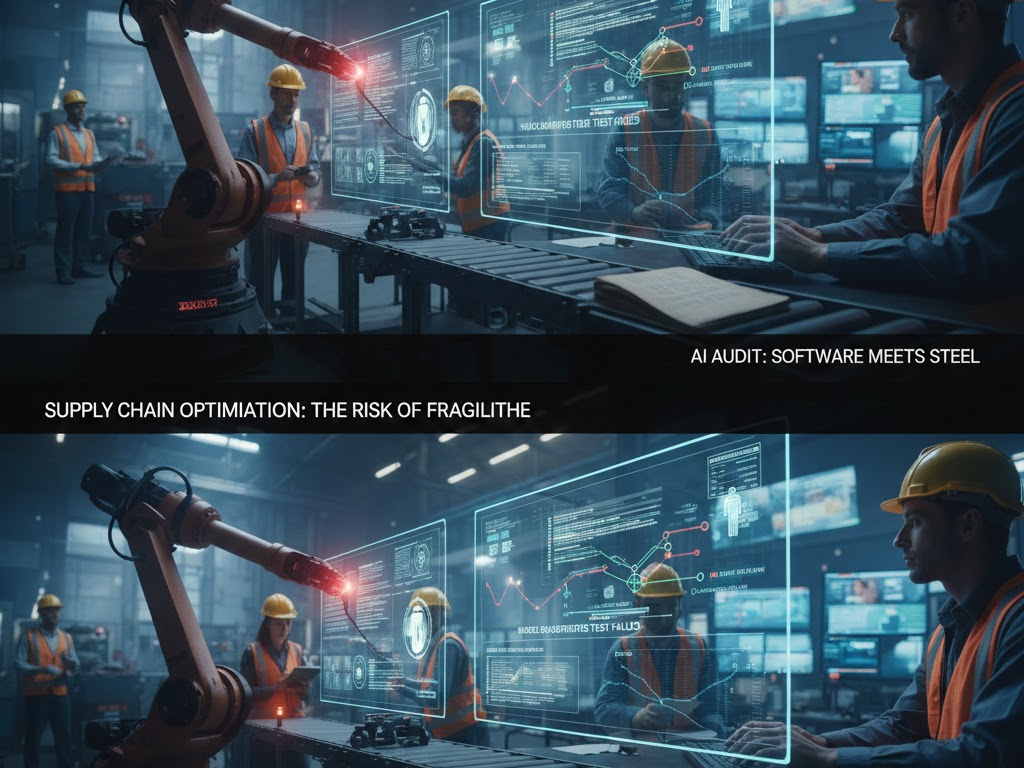
While the digital world worries about data privacy, the manufacturing sector worries about physical safety. In Industry 4.0, ai implementation involves 5-ton robotic arms, autonomous forklifts, and predictive maintenance systems that control critical infrastructure. Here, a software bug doesn’t just crash a computer; it can halt a production line or injure a worker.
Consequently, the ai audit in manufacturing is a unique discipline. It combines software engineering with physical engineering. This article outlines a practical ai implementation framework for the industrial sector, focusing on operational uptime, physical safety, and supply chain resilience.
The Manufacturing Audit: Safety and Integrity
In manufacturing, ai implementation in business operations is often driven by the desire for “Predictive Maintenance.” Sensors listen to the vibrations of a turbine to predict when it will fail. However, if the AI is wrong, the costs are massive.
• False Positive: You shut down a factory for repairs that weren’t needed (lost revenue).
• False Negative: The turbine explodes because the AI missed the warning signs (catastrophic failure).
Therefore, the audit ai process in manufacturing must focus on Sensor Integrity and Model Robustness. An ai assessment tool in this sector needs to verify that the data coming from the edge devices (IoT sensors) is accurate and has not been tampered with.
Furthermore, regarding robotics, the ai assessment must rigorously test “collision avoidance” protocols. The ai implementation strategy must prioritise worker safety above efficiency. An audit validates that the robot will stop immediately if a human enters its zone, regardless of what its optimisation algorithm dictates.
Supply Chain Optimisation: The Risk of Fragility
Beyond the factory floor, ai implementation is used to optimise supply chains, reducing inventory levels to the absolute minimum (Just-in-Time). While efficient, this makes the chain fragile. An ai audit of a supply chain model asks: “Is this model overfitting to stable conditions?” If an AI is trained on supply chain data from 2010-2019 (stable years), it might fail spectacularly during a “Black Swan” event like a pandemic or a geopolitical crisis.
A robust ai implementation framework for supply chains involves “Scenario Planning.” The ai in audit process involves feeding the system extreme scenarios (e.g., “Shipping costs triple overnight”) to see if the AI suggests resilient solutions or if it breaks down.
Strategy: Integration with Legacy Systems
The biggest hurdle for ai implementation in business within the manufacturing sector is “brownfield” sites—factories that are 40 years old. The ai implementation strategy here differs from a tech startup. You are not building from scratch; you are layering AI on top of legacy SCADA and PLC systems.
• Data Silos: The audit must reveal where data is trapped in proprietary machines.
• Interoperability: The ai assessment must verify that the new AI layer communicates correctly with the old machinery protocols (like Modbus or OPC-UA).
Implementing the “Digital Twin” for Auditing
A cutting-edge approach to audit ai in manufacturing is the use of Digital Twins—virtual replicas of the physical factory. Before deploying an update to the physical assembly line, manufacturers can run the ai implementation on the Digital Twin. This allows them to use an ai assessment tool to simulate months of production in minutes, catching bugs and safety violations in the virtual world before they impact the physical one.
Conclusion: Operational Resilience
In manufacturing, the goal of ai implementation is Operational Equipment Effectiveness (OEE). However, OEE cannot come at the cost of safety. By adopting a “Safety First” ai implementation framework and utilising Digital Twins for the ai assessment, manufacturers can reap the rewards of automation while protecting their workforce and their bottom line.